The Legal Dilemma of Asymmetric Arbitration Clauses
.png)
Arbitration is built on the idea of fairness, neutrality, and mutual consent. But what happens when a contract gives one party significantly more power than the other in choosing how disputes are resolved?
This is the core issue behind asymmetric arbitration clauses—a growing yet controversial feature in modern commercial contracts.
What Are Asymmetric Arbitration Clauses?
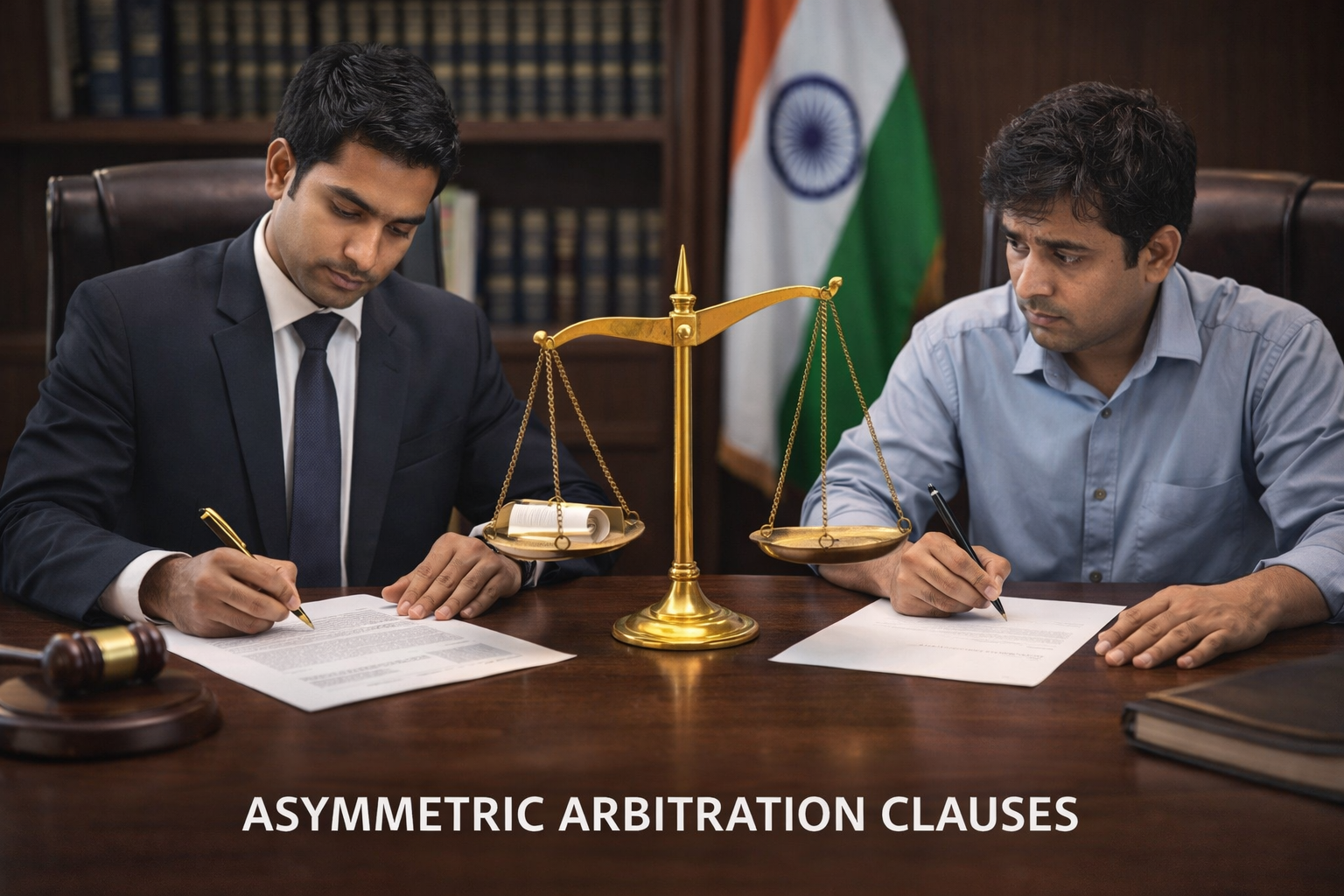
An asymmetric arbitration clause (also called a unilateral option clause) allows one party to choose between arbitration and litigation, while restricting the other party to a single forum.
For example:
- A lender may choose arbitration or court proceedings
- A borrower may be forced to arbitrate only
This creates a structural imbalance in dispute resolution rights.
Why Do Businesses Use Them?
These clauses are not accidental—they are strategic.
1. Risk Management Tool
Stronger parties (like banks or large corporations) use them to:
- Choose the most favorable forum
- Enforce claims across jurisdictions
2. Flexibility in Enforcement
They allow one party to:
- Arbitrate when confidentiality is needed
- Litigate when public enforcement is advantageous
3. Commercial Leverage
In contracts with unequal bargaining power, the dominant party often dictates such clauses as a condition of agreement.
The Core Legal Problem: Lack of Mutuality
Traditional arbitration rests on mutual consent and equality.
However, asymmetric clauses:
- Grant unequal procedural rights
- Limit one party’s access to legal remedies
Courts often question whether such clauses violate:
- Principles of fairness
- Public policy
- Contractual reciprocity
In India, this tension is particularly significant because arbitration agreements are expected to reflect balanced consent between parties.
The Indian Legal Position: A Grey Area
India does not yet have a clear, uniform stance on asymmetric arbitration clauses.
Conflicting Judicial Approaches
- Some courts have invalidated such clauses for lack of fairness
- Others have upheld them based on party autonomy
This inconsistency creates legal uncertainty, as:
- There is no definitive Supreme Court ruling
- Outcomes depend heavily on case-specific interpretation
As a result, the enforceability of these clauses in India remains unsettled and unpredictable.
Global Perspective: Not Universally Accepted
Different jurisdictions treat these clauses differently:
- England: Generally enforceable (supports contractual freedom)
- France: Stricter scrutiny; invalid if overly one-sided
- China: Often considered invalid
This global divergence highlights a key issue:
There is no universal standard for fairness in asymmetric arbitration.
The Bigger Debate: Party Autonomy vs Fairness
At the heart of this issue lies a fundamental legal conflict:
Party Autonomy
- Parties are free to design their contracts
- Courts should respect commercial choices
Substantive Fairness
- Contracts should not create unjust imbalance
- Legal remedies should remain equally accessible
When one party controls dispute resolution, autonomy risks turning into dominance.
Implications for Businesses and Individuals
For Corporations
- These clauses offer strategic advantages
- But may face enforceability challenges
For Individuals / Smaller Parties
- Limited ability to challenge disputes
- Increased dependency on the stronger party’s choices
The Way Forward: Need for Legal Clarity
To resolve this uncertainty, India needs:
1. Judicial Clarity
A definitive ruling from the Supreme Court to:
- Standardize enforceability
- Define acceptable limits
2. Balanced Drafting Standards
Contracts should:
- Avoid extreme one-sidedness
- Ensure minimum procedural fairness
3. Public Policy Intervention
Lawmakers may need to:
- Restrict unfair clauses in consumer and employment contracts
- Protect weaker parties