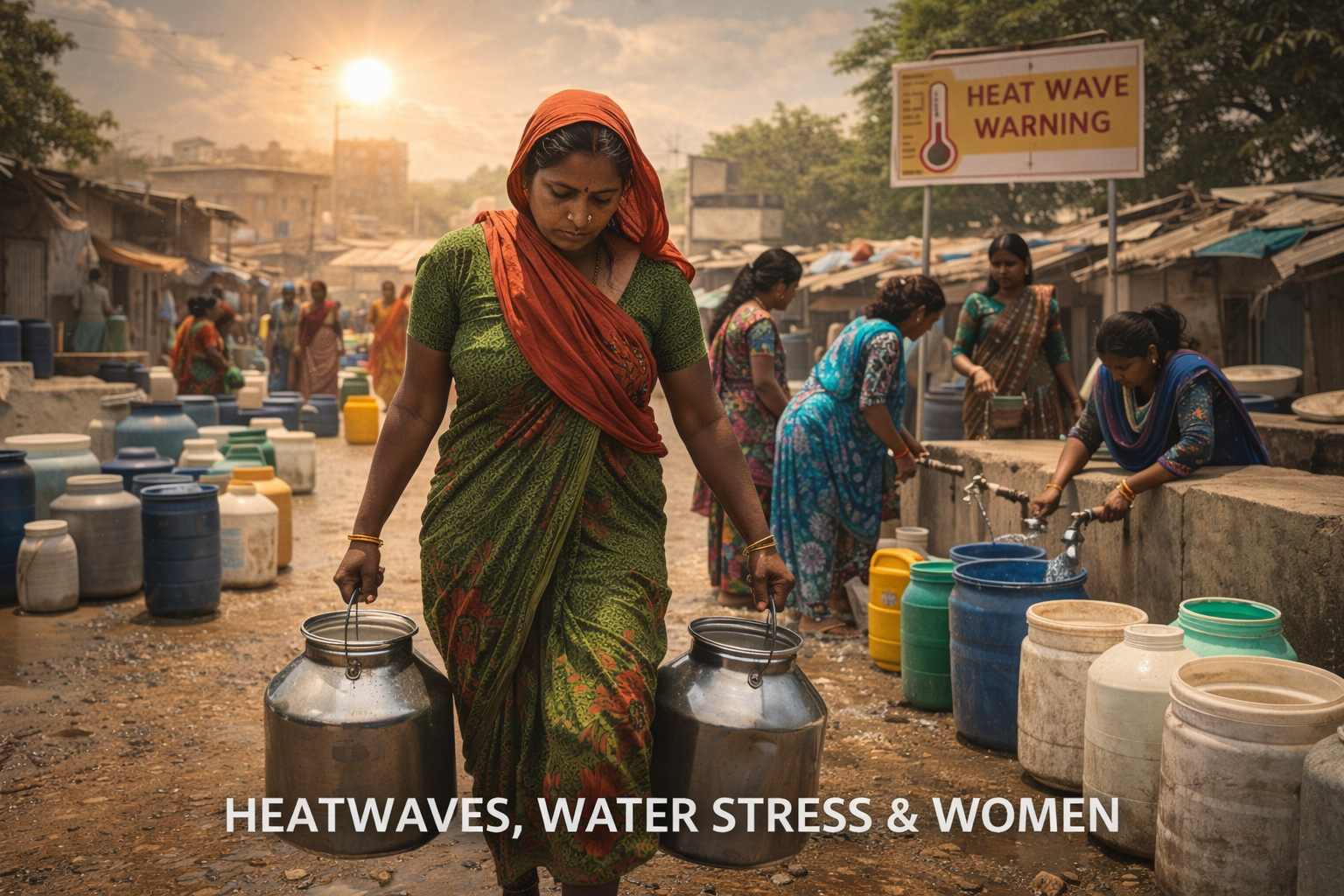
Why India’s Climate Plans Must Recognize Women’s Burden
.png)
As India faces increasingly severe heatwaves, cities have turned to Heat Action Plans (HAPs) as a primary tool to prevent deaths and manage extreme temperatures. While these plans have improved early warning systems and emergency responses, they often overlook a critical dimension of climate resilience: the gendered burden of water access.
At the intersection of heat and water scarcity lies an invisible crisis—one that disproportionately affects women.
Understanding Heat Action Plans in India
Heat Action Plans are designed to:
- Reduce heat-related mortality
- Provide early warnings and public advisories
- Coordinate emergency responses
They have become a central part of India’s climate strategy, especially in urban areas.
However, most HAPs still treat heat as a short-term seasonal disaster, focusing on immediate relief rather than long-term structural issues like housing, infrastructure, and water systems.
The Missing Link: Water Stress
Extreme heat and water scarcity are deeply interconnected.
- Heat increases water demand for drinking, cooling, and hygiene
- Water supply often becomes irregular or insufficient
- Infrastructure struggles to meet peak demand
Heatwaves can intensify drought-like conditions and strain water systems, worsening access for vulnerable populations.
Yet, many heat action plans only address public drinking water points, ignoring how households—especially in informal settlements—secure water daily.
Why Women Bear the Greatest Burden
Water access in India is not just an infrastructure issue—it is a social responsibility often assigned to women.
1. Daily Water Procurement
Women frequently:
- Queue at public taps
- Track tanker schedules
- Walk long distances to fetch water
During heatwaves, this effort intensifies as demand rises but supply remains limited.
2. Increased Physical and Mental Stress
Lack of water during extreme heat:
- Increases physical strain from carrying water
- Reduces ability to cool the body
- Adds psychological stress due to household pressure
Studies highlight that heat and water scarcity together amplify health and livelihood risks for women.
3. Impact on Work and Economic Participation
Time spent securing water:
- Reduces income opportunities
- Limits participation in paid work
- Reinforces economic inequality
4. Exposure to Unsafe Conditions
Crowded water points and long travel distances:
- Increase safety risks
- Expose women to harassment or violence
The Structural Gap in Heat Planning
Most HAPs identify “vulnerable groups,” but often define vulnerability narrowly—based on age or health conditions.
They fail to consider:
- Gender roles
- Informal labour conditions
- Social inequalities (caste, income, occupation)
As a result, the everyday realities of coping with heat remain invisible in policy design.
Why a Gender-Responsive Approach is Essential
Some emerging frameworks are beginning to recognize that:
- Women face higher exposure due to domestic and care work
- Tasks like cooking and water collection increase heat stress
- Climate resilience must include gender-sensitive planning
This marks a shift toward inclusive climate governance, but implementation remains limited.
Rethinking Heat Action Plans: The Way Forward
To make climate policy truly effective, India must move beyond surface-level interventions.
1. Integrate Water Security into Heat Planning
- Map water shortages at neighborhood levels
- Increase supply during peak heat periods
- Ensure emergency water access
2. Recognize Gendered Labour
Policies must:
- Acknowledge unpaid care work
- Factor women’s roles into vulnerability assessments
- Design targeted interventions
3. Community-Centric Planning
Top-down approaches often miss local realities.
Cities should:
- Involve women in planning processes
- Use ward-level data and community feedback
- Identify hyper-local risks
4. Strengthen Legal and Institutional Backing
Many HAPs lack enforceability.
There is a need for:
- Clear accountability mechanisms
- Dedicated funding
- Cross-department coordination
The Bigger Question: What Does Climate Justice Mean?
Climate resilience is not just about surviving heatwaves—it is about who bears the cost of survival.
If women continue to shoulder the burden of water access without recognition or support, then climate policies risk reinforcing existing inequalities.